
1914/15 Star Trio to Roberts E Yorks Reg – Sunderland Coal Miner.
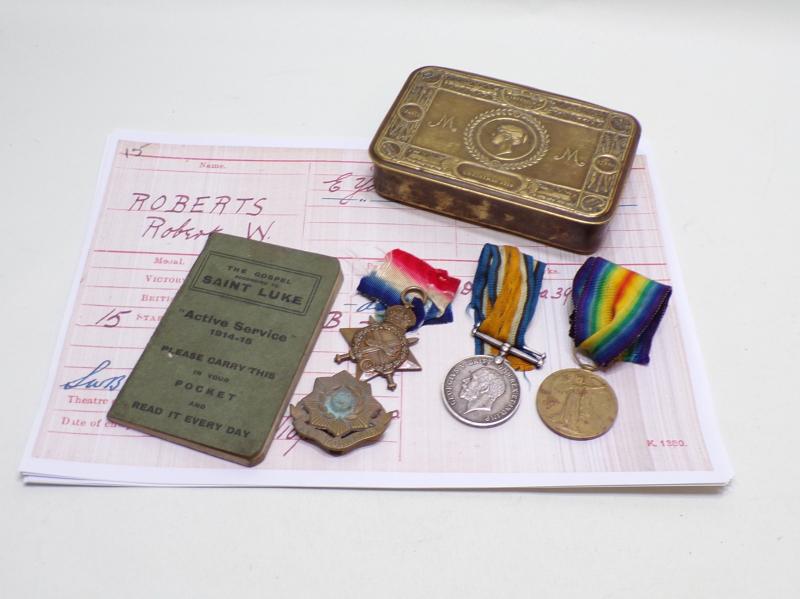
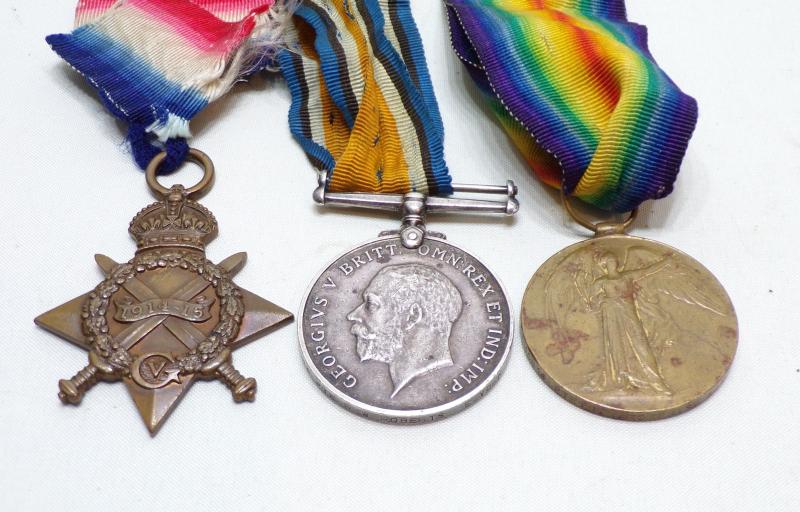
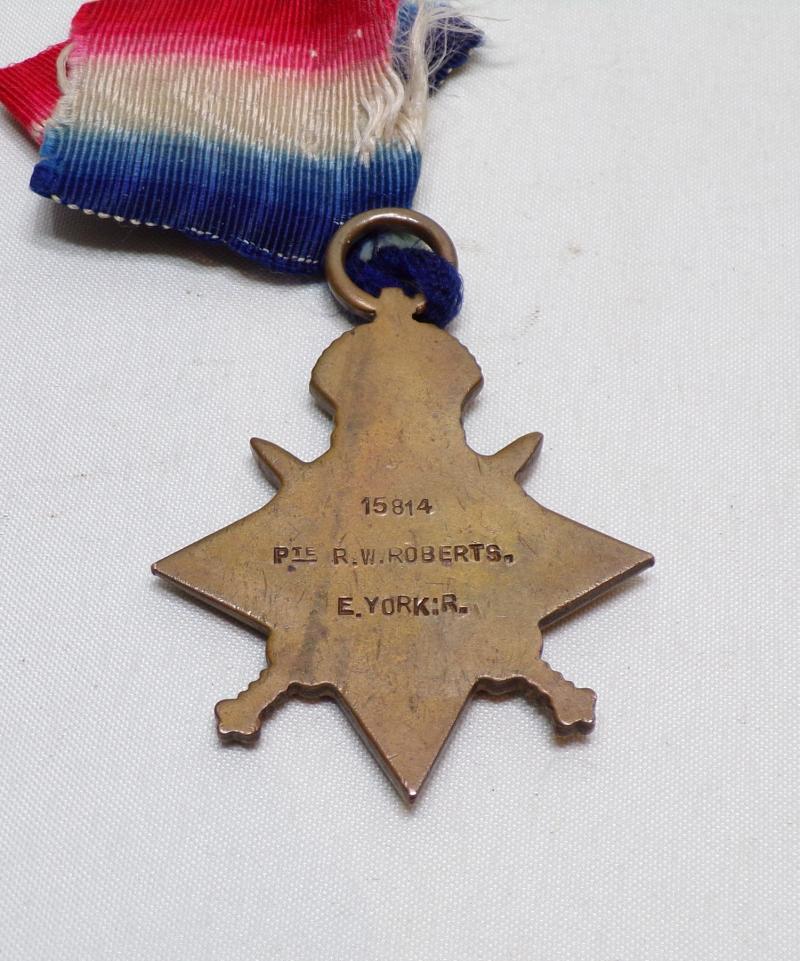
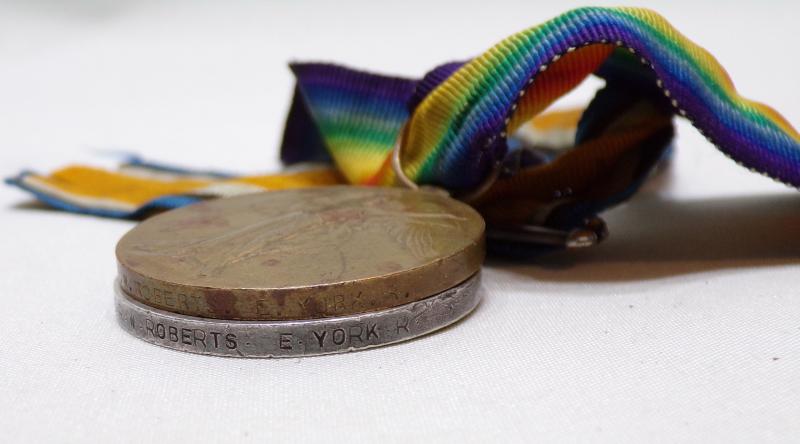
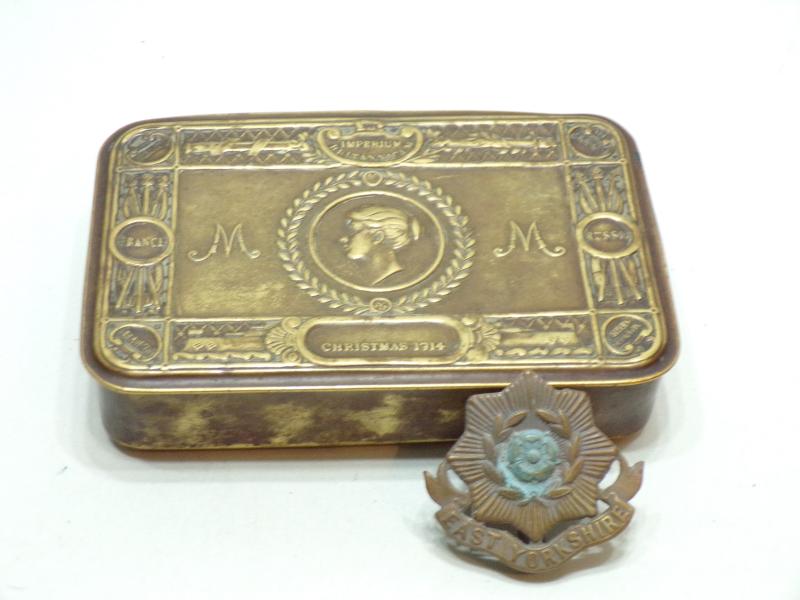
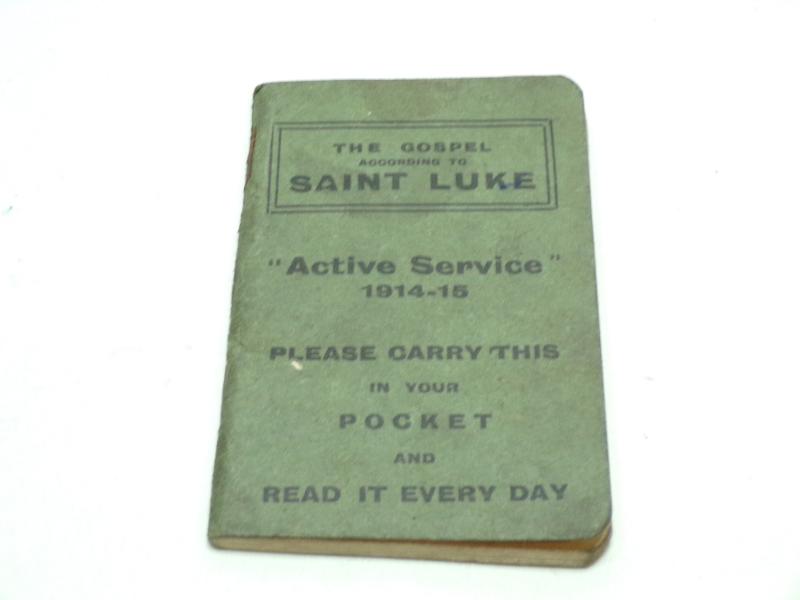
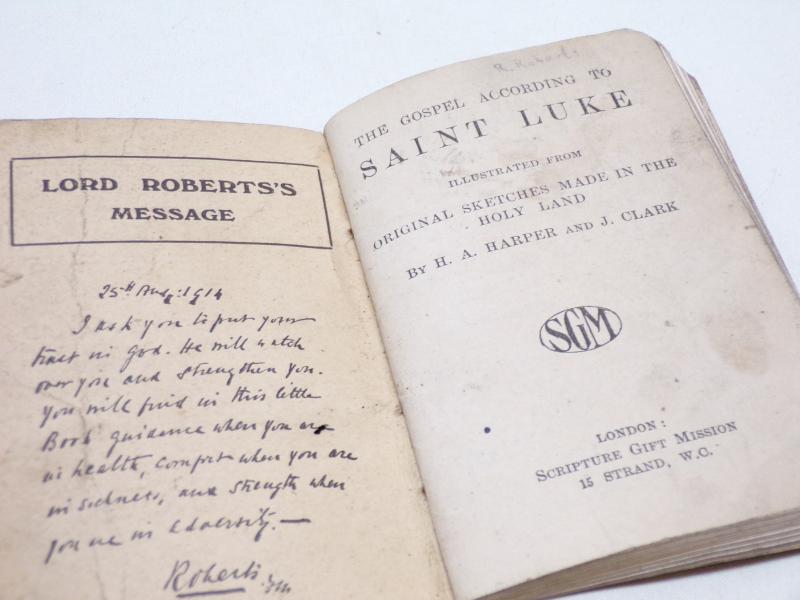
A really interesting a quite sad group of medals and items to a Sunderland man. It includes 1914/15 star, British war and victory medal correctly named to 15814 Private R. W. Roberts E. York. R. Active Service Bible 1914 – 15 the gospel to Saint Luke, named inside ‘R Roberts’. Plus, badges and insignia etc all housed in a WW1 Princess Mary’s Christmas gift tin.
Robert Weaver Roberts was born in Monkwearmouth, Sunderland 1894. Even at the age of sixteen he was employed as a Coal Mine Putter, a boy, young man, or sometimes woman who transported loaded tubs of coal from the narrow working face to main hauling roads or pit bottoms. By 1911 Roberts father, Robert also a coal miner, had died and he was being raised by his mother Jane along with three other brothers.
He enlisted into the East Yorkshire regiment on 9th November 1914, initially into the 6th Battalion.
On the 1st July 1915, the battalion sailed from Avonmouth for Gallipoli via Mudros and landed at Suvla Bay 7 August 1915 with the 32nd Brigade, 11th (Northern) Division.
They were withdrawn from Gallipoli on the 19th and 20th December and moved to Imbros. They moved again on 26th January to Egypt, landing at Alexandria on 22nd February and moving on to take over a section of the Suez Canal defences and also to recover from the heavy casualties they endured in Gallipoli.
The 11th Division received orders on 17th June 1916 to move to France and embarkation at Alexandria and landed at Marseilles on the 10th July and by 27th July. Around this point he was transferred to the 8th Battalion East Yorkshire regiment part of the 8th Brigade, 3rd division, and made Lance Corporal.
As soon as he reached France he was in the front line at the Somme taking part in the battle of Bazentin Ridge and the bitter fighting at Delville Wood and Guillemont.
In Novemer 1916 the 8th battalion 8th Brigade took part in the last phase of the Somme offensive, the Battle of the Ancre.
8th Brigade attacked on the right with 8th East Yorks Regiment in the second line. The attacking battalions struggled through mud that was at times waist-deep and got left behind by their protective creeping barrage. In the second line 8th East Yorks Regiment had the furthest to go, across 1,000 yards of broken trench bridges and shell-torn ground before they reached the front. As they filed forward, the German counter-barrage caught D Company coming up the rear. The 8th battalion then followed the leading wave. Both waves struggled through gaps in the wire and across the German front line. Parties of all four battalions of 8th Brigade reached the German support line, but with the large quantity of men arriving there, all got mixed up in the confusion. The whole mass of men was tumbled back to where they started. The 8th East Yorkshires lost 2 officers killed and 3 wounded, 23 ORs killed, 177 wounded and 30 missing.
The 3rd Division moved to the Arras sector in February 1917 the 8th battalion spent several tours in the St Sauveur trenches before a short period of training for the forthcoming Arras Offensive and taking part in the first and second battle of the Scarpe. They were in Corps Reserve during the Battle of the Menin Road Ridge on 20th to 25th September and then participated in the Battle of Polygon Wood. On the 26th September and 8th Brigade was on the left flank on the attack on Zonnebeke. The whole affair amounted to heavy casualties including their beloved Padre.
After relief, the 8th East Yorks left the Ypres Salient and travelled south, reaching Beugnâtre by 13th October, where it underwent two weeks' training. It then returned to the line in the Noreuil sector, northeast of Bapaume, where in April the Australians had mounted an heroic attack to capture the village, sustaining many casualties. Famously the 13th Battery of the Australian Field Artillery was surrounded but continued to fight, driving back the enemy.
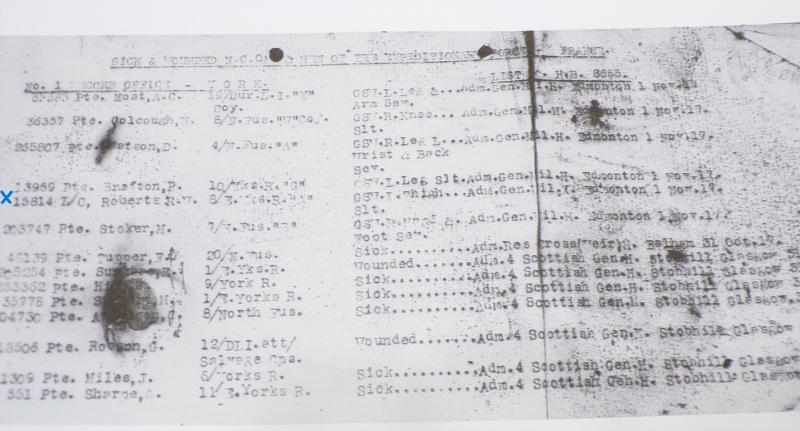
It was around this area, (unfortunately I have been unable to pinpoint where), Robert was seriously wounded, receiving gunshot wounds to his thigh, right arm, right hand and wrist, which looks like machine gun wounds. He was sent back to a British hospital to recover. For Robert war was over and discharged on 28th July 1918 and he is also entitled to the Silver War Badge
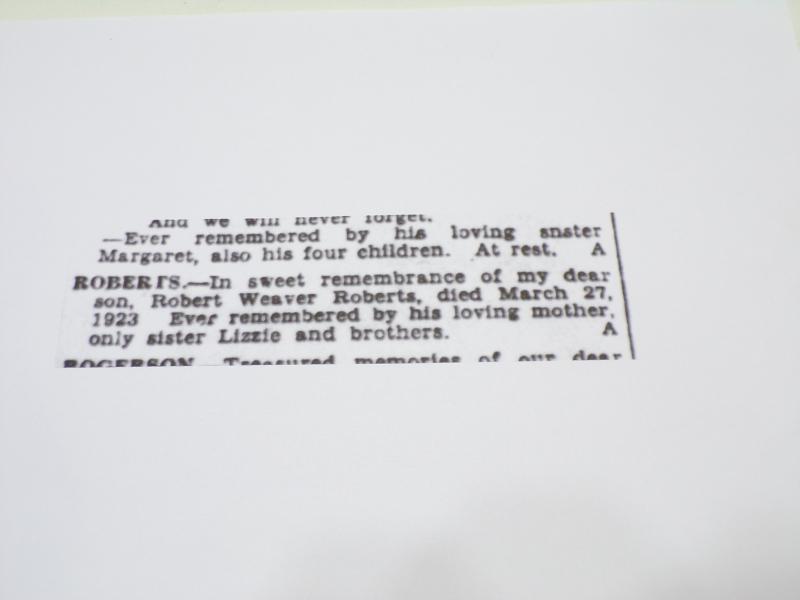
By 1921 he is back in Sunderland and married to Ellen, he is employed as a coal miner at the Wearmouth Colliery. Sadley Robert died in 1923 in a Colliery accident on 27th March. The Wearmouth Colliery was privately own at this time, and although accidents were quite common, deaths were rarely publicised, so no concise details have been found.
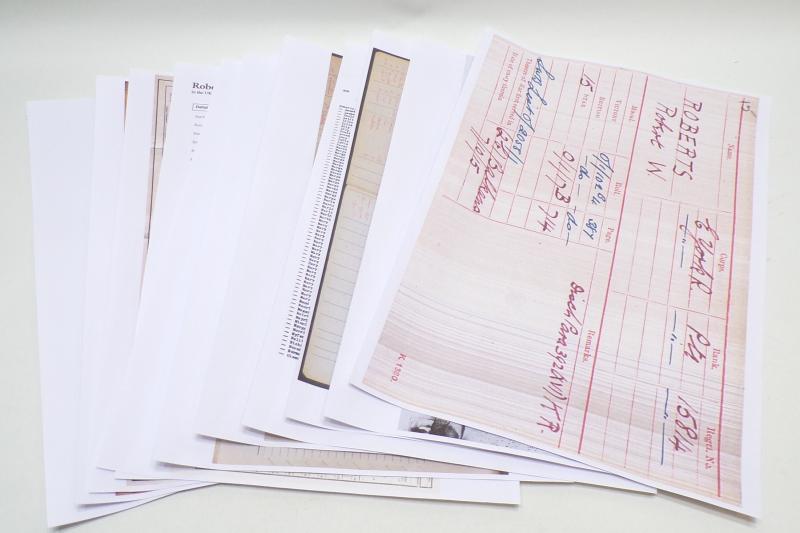
His medal trio is in very good original condition and on their original ribbons, Star ribbon very scruffy, replacement suplied. All stored in his Christmas tin and comes with various research confirming the above.
A very heart-rending group to a young man who lived through the horrors of Gallipoli and the arduous fighting conditions on the Western Front, wounded on the battlefield to return to the home he fought for, to die so young in peacetime at the age of 29.
Code: 31418