
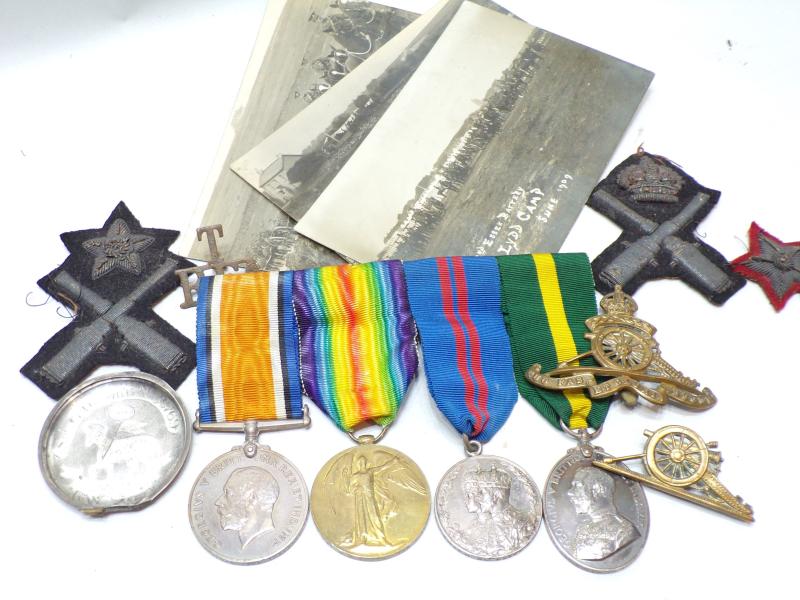
Territorial Force Medal Group 4 to Smith RFA & Queens.
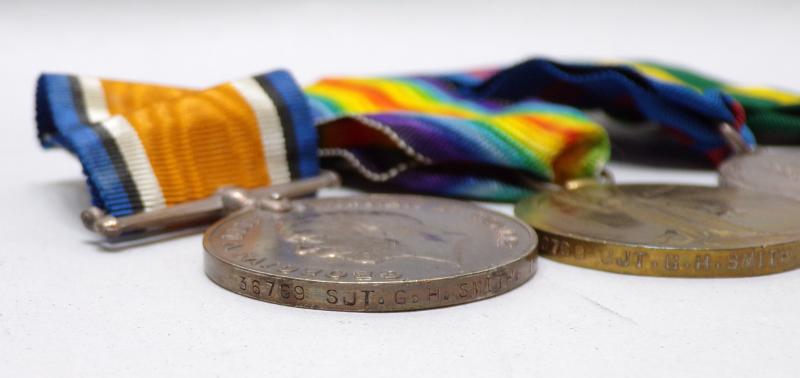
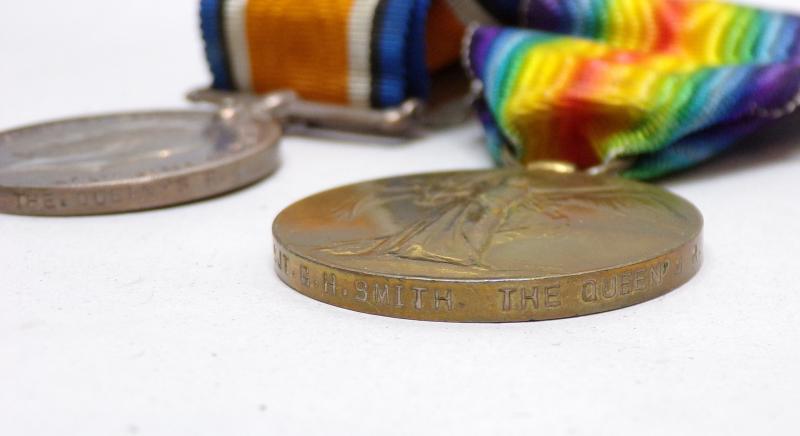
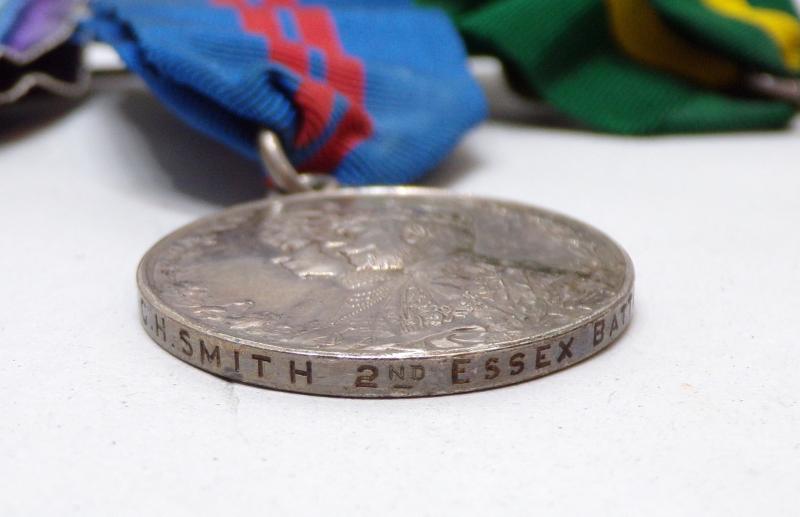
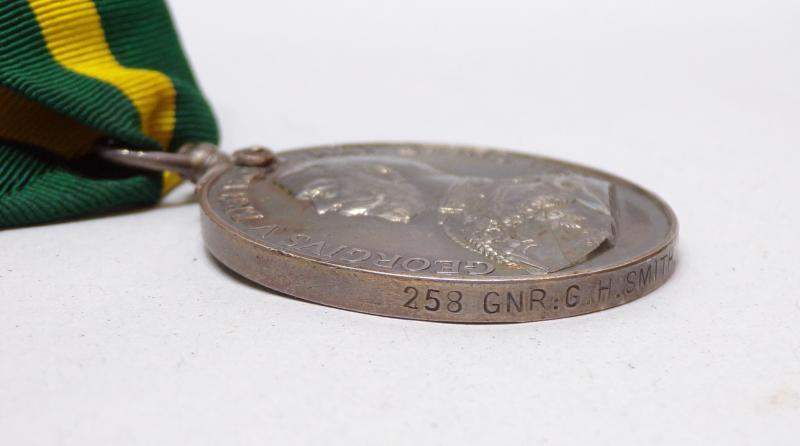
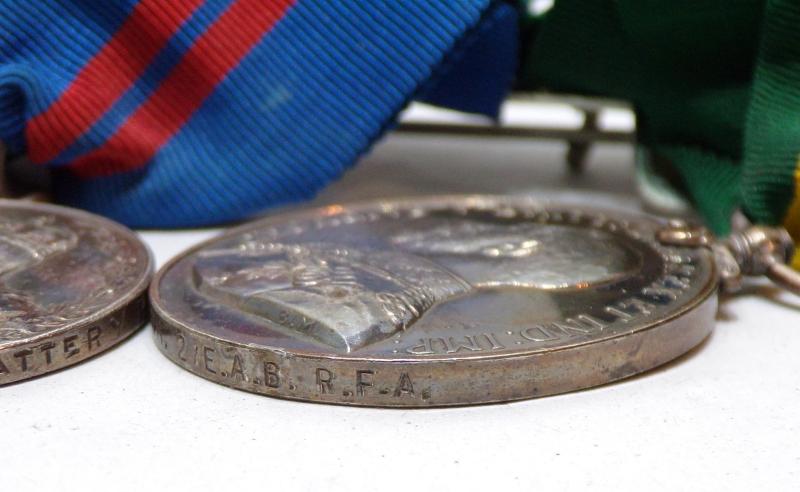
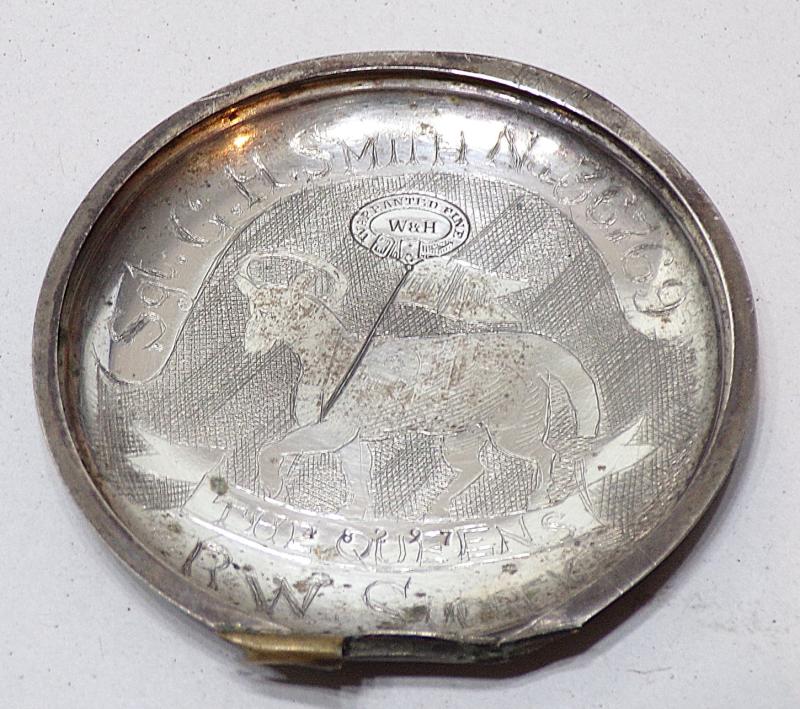
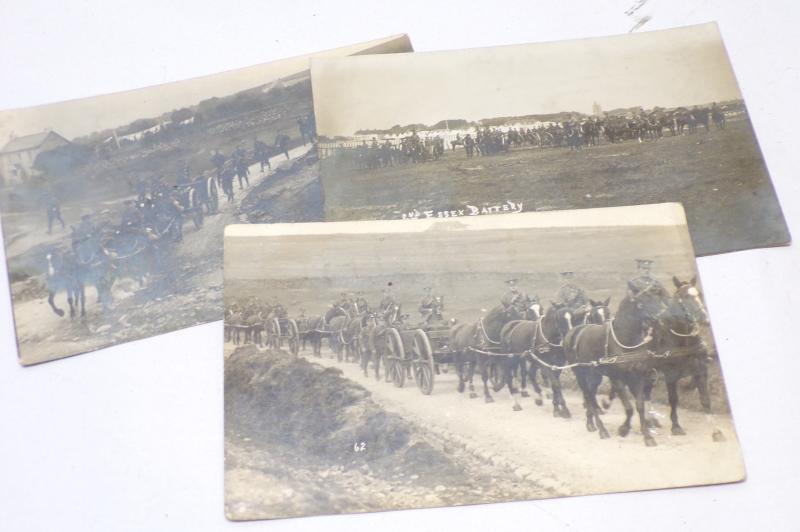
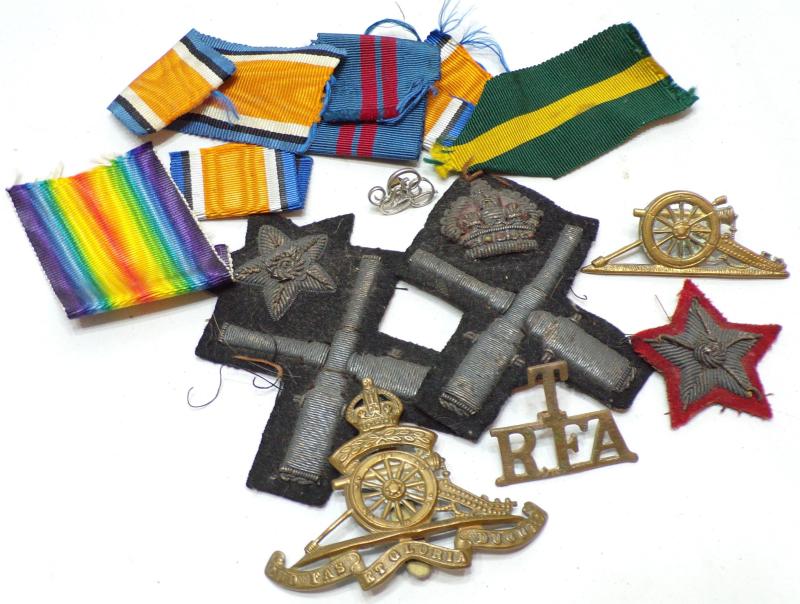
A very interesting medal group of 4 comprising of the WW1 British War and Victory medal correctly named to 36769 Sjt G H Smith the Queen’s R. George V Coronation medal privately named / engraved to Gunner G H. No 258. And the George V territorial Force Efficiency medal to 258 Gnr G H Smith 2 Essex Battery R.F.A.T Smith 2 E.A.B R.F.A. His group also comes with various badges and insignia, photographs Etc.
George henry Smith was born in 29th March 1877 in Hampshire, his father Joseph was a Mariner from Southampton. He married Sarah Rebecca Cross in 1898 in Essex; he was working as a Carter in Romford Essex. At some point before 1909 he enlisted into the 2nd Essex Artillery Battery Royal Field Artillery, he could handle horses and the extra pay came in handy supporting his growing family. he was with his regiment at the 1909 Territorial review at Lydd Camp in Kent and serving during King George’s Coronation in 1911.
He was still with this regiment when war broke out in 1914 serving on home defence during the first year of the war. At his own request he asked to be transferred to a fighting unit and in February 1915 he was placed with the Queen’s Royal West Surrey Regiment, probably with the 3/4th battalion as lance Corporal, landing in France in the May of 1917. Soon after George was promoted to Serjeant. He was again transferred to the newly formed Labour Corps as Serjeant in the 363 (reserve employment) company but remained on the Western Front. This company had several important functions. As a training unit for men, often wounded or medically downgraded from frontline duties, Camp and Hospital Support. Men in the unit performed vital day-to-day employment tasks around military camps, depots, and medical facilities. But in George’s case as he remained in France, he was probably overseeing drafted or replacement troops deployment to various battalions in the division. He was transferred back home in June of 1918 to carry on his same duties in the UK still holding his rank of Serjeant.
He was discharged in the September of 1918 as no longer physically fit for war service having served 3 years 223 days. He was sent to the Military Hospital, Chelsea, probably for convalescence before returning home to his family in Barking. After the war he worked as a Motor Lorry driver, living with his wife Sarah and his four girls and one son. They were a typical working-class family of the era, probably just scraping by, even though George had a small army pension. His daughters were at work in the local Asbestos factory, the Self-opening tin works and one at a box making company, the youngest girl and his son were still at school. In the 1939 registry, George, Sarah and most of their children are still living at the same address that he gave on his attestation papers all those years ago, 42 St James Street Barking. Sadly, George died in 1955, and Sarah followed him a year later.
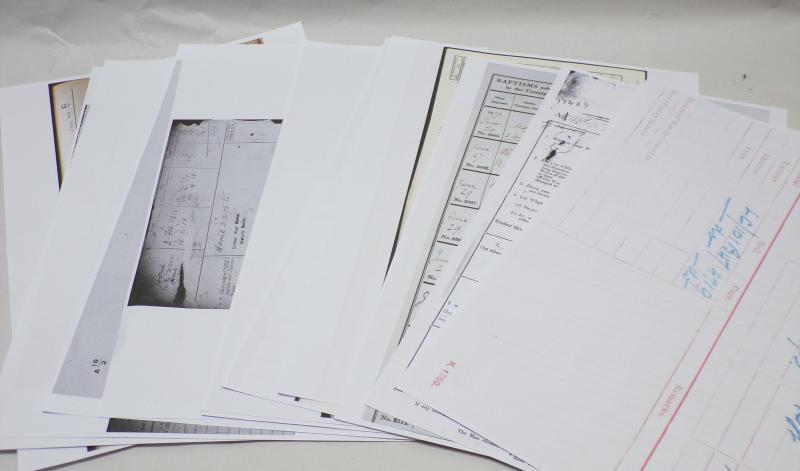
Of course I have only touched on this mans history, so provided is copies of his service records, medal index card, medal rolls and census records etc. his medals are in very good condition, mounted as worn.
Code: 31576